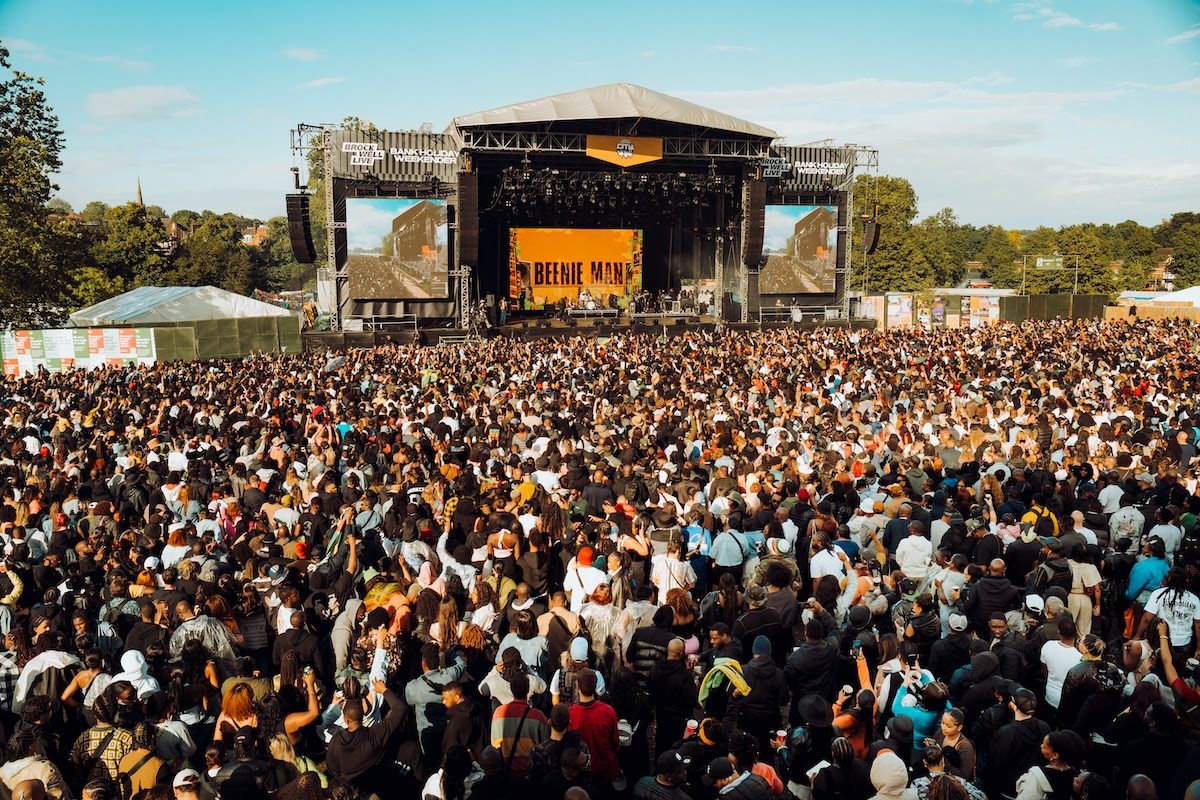
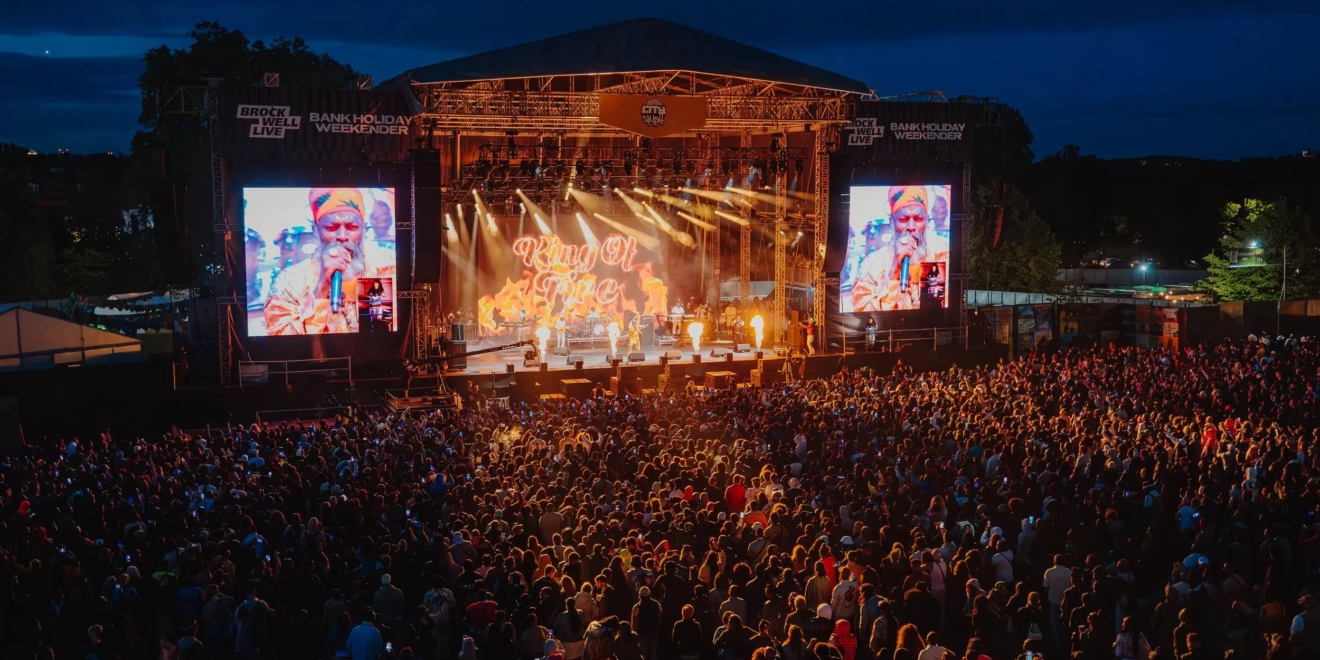
Beres Hammond, Gyptian, Jada Kingdom, Aidonia and Elephant Man led a broad celebration of reggae, dancehall, lovers rock and Black British sound-system culture at Brockwell Park.
London’s Bank Holiday calendar is crowded with festivals, but City Splash occupies a space that few others can convincingly claim.
Returning to Brockwell Park on Monday, 25 May, the one-day festival brought together reggae veterans, contemporary dancehall artists, UK selectors, sound systems and emerging voices for a large-scale celebration of Caribbean and African music and culture.
HWING attended City Splash 2026 as thousands of festivalgoers transformed the South London park into a meeting point between generations, genres and communities.
The programme moved freely between roots reggae, lovers rock, dancehall, Afrobeats, UK garage, grime and bass music. Headliner Beres Hammond was joined by a lineup featuring Gyptian, Jada Kingdom, Aidonia, Elephant Man, Queen Ifrica, The Congos, Lutan Fyah, Juls, So Solid Crew, BXKS, Cristale, Donae’o and Heartless Crew, alongside an extensive selection of DJs and sound systems.
That range is central to City Splash’s appeal. Rather than presenting Caribbean music as a single sound or moment in history, the festival showed how the culture continues to evolve while remaining connected to its foundations.
Brockwell Park Becomes the Home of Culture
From the moment the crowds began moving through Brockwell Park, City Splash felt less like a conventional outdoor concert and more like an extended cultural gathering.
Jamaican flags, bold summer outfits, whistles and horns added colour throughout the grounds, while the smell of jerk cooking and Caribbean food travelled between the stages. DJs moved quickly between reggae classics, dancehall anthems, UK garage and Afrobeats, ensuring that music remained present even during the gaps between live performances.
The festival describes itself as more than an event, presenting City Splash as a family, a movement and a platform for people “celebrating and pushing the culture.” That language can sometimes feel like promotional shorthand, but at Brockwell Park it was visible in the audience itself. Families, younger dancehall fans, veteran reggae listeners and members of London’s sound-system community occupied the same space.
City Splash works because it understands that Caribbean music in Britain is not a niche concern. Its influence can be heard across jungle, garage, grime, UK rap, dubstep and contemporary electronic music. The festival’s programming allowed those relationships to exist alongside the original forms that made them possible.
Beres Hammond Brings Lovers Rock to the Main Stage
Beres Hammond’s headline appearance provided City Splash with one of its most important bookings to date.
The Jamaican singer has spent decades developing a catalogue centred on romance, vulnerability and emotional restraint. His music rarely depends on spectacle. Instead, its power comes from phrasing, warmth and a voice that can make a large outdoor audience feel remarkably intimate.
His appearance was promoted as an exclusive UK performance and his first City Splash headline set. It also marked his return to a British festival audience after several years away.
That sense of occasion could be felt as the crowd gathered around the main stage. Hammond represented more than nostalgia. His performance connected City Splash to a tradition of reggae songwriting that has influenced generations of artists across Jamaica, Britain and beyond.
Songs from across his career were met with immediate recognition, particularly by an audience that understood every pause, harmony and familiar opening rhythm.
Where other performers approached the festival with movement and impact, Hammond relied on control. His set offered a reminder that lovers rock and reggae’s romantic tradition remain essential parts of the culture, not simply heritage music preserved for older listeners.
Gyptian Delivers a Festival-Wide Singalong
Gyptian provided one of the day’s most recognisable crossover moments.
The Jamaican singer’s catalogue sits comfortably between reggae, lovers rock and dancehall, allowing his performance to reach different sections of the City Splash audience. His melodic delivery translated particularly well across Brockwell Park, where his best-known records quickly became communal singalongs.
Contemporary coverage of the event described Gyptian as one of the artists who visibly impressed the crowd during an exceptionally hot day at the park.
His set demonstrated one of City Splash’s strengths: its ability to place widely recognised international records within a programme that also makes space for selectors, sounds and artists whose influence may not always be reflected by mainstream chart positions.
At City Splash, the audience did not need an introduction to Gyptian’s importance. The reaction arrived from the opening notes.
Dancehall Energy Takes Over
If Beres Hammond supplied the emotional centre of the festival, the dancehall performers delivered its most explosive energy.
Aidonia arrived with the authority of an artist whose catalogue has remained central to Jamaican dancehall for more than two decades. His delivery was precise and forceful, built around the kind of records designed to command immediate crowd participation.
Jada Kingdom represented a newer generation. Her presence reflected how contemporary dancehall has expanded its emotional and sonic range, allowing artists to move between vulnerability, confidence, melody and harder-edged production without being restricted to a single lane.
Elephant Man brought a different form of intensity. Long associated with dancehall’s high-energy performance tradition, his appearance drew a large audience and created one of the day’s most animated stretches.
His booking was not without controversy. Local coverage reported that some people had objected to his inclusion because of the history and content of some of his lyrics, which have previously led to protests and international boycotts from LGBTQ+ campaigners.
A credible festival review should not overlook that context. City Splash is built around celebration and community, but cultural events also have a responsibility to consider how their bookings align with the values they present publicly.
The reaction inside Brockwell Park, however, confirmed that Elephant Man retains a substantial following. His performance leaned heavily into movement, call-and-response routines and the physicality that earned him his reputation as an energetic live performer.
Reggae’s Foundations Remain Visible
Away from the biggest dancehall moments, City Splash maintained a strong connection to reggae’s history.
Queen Ifrica, The Congos and Lutan Fyah brought roots, social commentary and Rastafarian consciousness into a programme that could easily have relied only on faster, more commercially recognisable sounds.
The Queens of Lovers Rock presentation, featuring Janet Kay and Carroll Thompson, gave the British side of the genre its deserved prominence.
Lovers rock emerged in Britain during the 1970s, creating a softer and more romantic reggae sound that spoke directly to Black British experiences. Its influence remains present in R&B, soul, reggae and contemporary UK music, even when it is not always named.
By positioning these artists alongside Jada Kingdom, Aidonia and newer UK acts, City Splash created an intergenerational conversation rather than dividing the programme into “heritage” and “current” sections.
The Congos’ presence carried particular weight. Their work belongs to reggae’s foundational period, and their inclusion helped locate the festival within a much longer story of Jamaican recording, spirituality and resistance.
Sound-System Culture Remains the Festival’s Backbone
Some of City Splash’s most important performances did not come from the main stage.
Channel One, Saxon Sound, Rampage Sound, Robbo Ranx, Seani B, Heartless Crew, DJ Ace and other selectors occupied a programme that acknowledged the sound system as one of the central institutions of Caribbean music.
Before streaming services, social media and modern festival circuits, sound systems functioned as broadcasters, record-breakers, community centres and competitive cultural spaces. Their influence travelled from Jamaica into British reggae, jungle, garage, grime and dubstep.
At City Splash, that history was not presented as a museum piece.
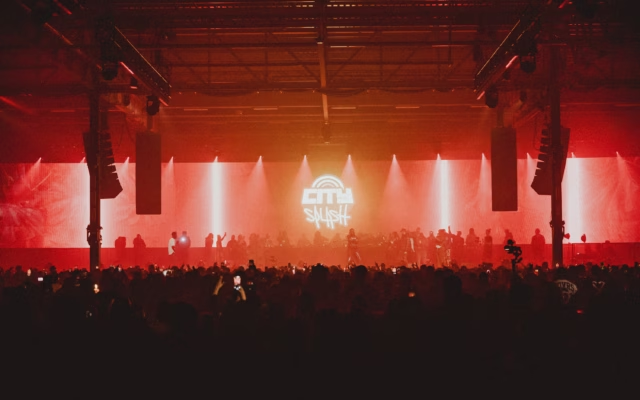
The tents and smaller arenas often offered a different kind of experience from the headline stage. The distance between performer and audience felt reduced, selections could change direction instantly, and the crowd responded not only to complete songs but to basslines, rewinds and vocal fragments.
Heartless Crew’s appearance was one of the clearest bridges between Caribbean sound-system practice and the development of UK garage. Local reporting identified their Big Top performance as one of the festival’s crowd-pleasing moments.
So Solid Crew, Donae’o, Cristale and BXKS further reinforced the connection between Caribbean influence and Black British music. Their inclusion showed that City Splash is not solely about importing Jamaican culture into London. It is also about recognising what London’s Caribbean communities have created themselves.
A Festival Tested by Extreme Heat and Large Crowds
City Splash took place during extraordinary heat.
Temperatures reportedly approached 35°C, with equipment covered in reflective material to prevent overheating. The conditions placed pressure on performers, staff and festivalgoers throughout the day.
The scale of the audience also created operational challenges.
Brixton Buzz reported an hour-long VIP queue, frustration around the entrance and uncomfortable levels of crowding near the main stage.
These issues matter because they affect the overall festival experience. A strong lineup cannot entirely compensate for delays, overcrowding or inadequate management of people during extreme weather.
From a journalistic perspective, City Splash 2026 should therefore be assessed as both a cultural success and an event with logistical areas to improve.
The music and audience created the positive energy for which the festival is known, but future editions would benefit from stronger entrance management, clearer crowd-flow planning and additional safeguards during periods of severe heat.
Those improvements would protect what makes the festival special rather than diminish it.
More Than a Collection of Performances
The most convincing aspect of City Splash is its sense of purpose.
Many festivals use Black music as a programming category. City Splash treats it as a living culture, shaped by migration, community, technology, fashion, food and shared memory.
That distinction could be felt throughout Brockwell Park.
Beres Hammond did not appear in isolation from Heartless Crew. Lovers rock was not separated from dancehall. Reggae sound systems were not treated as background entertainment while the headline artists occupied the “real” stages.
Instead, each part of the programme contributed to a wider account of how Caribbean music moves across generations and borders.
For HWING, City Splash also demonstrated why independent music journalism must continue to cover festivals beyond their biggest names.
The main stage may create the most visible photographs, but the story of an event often exists in the connections between its stages: the selector introducing a younger crowd to a reggae classic, the veteran artist performing beside a new generation, or a UK act revealing how deeply Jamaican musical language has shaped its sound.
City Splash Continues to Define Its Own Lane
City Splash 2026 was not flawless.
The entrance experience, heat and crowd density placed avoidable pressure on parts of the day, while the controversy surrounding one booking raised legitimate questions about representation and accountability.
However, the festival’s wider cultural value remained clear.
There are few events in Britain capable of placing Beres Hammond, Gyptian, Jada Kingdom, Queen Ifrica, So Solid Crew, Channel One and emerging UK rappers within the same coherent programme.
City Splash did not need to flatten those artists into a single genre. It allowed the distinctions between roots reggae, lovers rock, dancehall, garage and rap to remain visible while showing how closely their histories are connected.
As the final performances echoed across Brockwell Park, the festival’s significance extended beyond the music heard that day.
City Splash offered a picture of Caribbean culture as something active, influential and continually renewed. Its foundations were respected, its present was celebrated and its future was given room to develop.
For one Bank Holiday Monday in South London, Brockwell Park did not simply host the culture.
It moved to its rhythm.